Posts

Showing posts with the label Chronicles of Narnia

Oh, the (Abolition of) Humanity: An Interview with Michael Ward

Image
He has forever changed the way we read  The Chronicles of Narnia . He has been hailed by N.T Wright as “the foremost living Lewis scholar.” And now he’s giving modern-day readers fresh insights into Lewis’s writing in his newest scholarly work, published by Word on Fire Academic . Dr. Michael Ward is a professor, writer, author, speaker, and thespian. And that’s only what he does on the weekends. But seriously, and more personally, Michael Ward was instrumental in revitalizing my interest in the Narnia series, which I had mislabeled as a hodgepodge of narrative and thematic elements. (To my credit, J.R.R. Tolkien made the same mistake himself.) Due in large part to Ward’s influence, I have grown in my enjoyment and appreciation of Lewis’s work. Ward’s newest book, After Humanity , follows in the footsteps of Planet Narnia by introducing readers to a deeper understanding of one of Lewis’s works —in this case,  The Abolition of Man . In preparation for the book release, ...

Chronological “Snubbery”: On the Proper Reading Order for The Chronicles of Narnia

Image
Those who purchase a book set of The Chronicles of Narnia today might assume the content of the series is in the same format as it was when C. S. Lewis first wrote it. That assumption, while understandable, is inaccurate. For the length of C. S. Lewis’s life (and decades beyond), his seven books from the world of Narnia were arranged so that readers would go through them in the order in which they were published. In 1994, however, the books were reordered and renumbered. The seven separate installments, as they were originally written and released, progressively develop the world of Narnia. As such, the rearranged book set unfolds the overarching narrative in a jumbled fashion. It ends up revealing information to the first-time reader in a slapdash manner. At several key narrative points, the current book order tips its hand to the reader before it even makes its play (so to speak). The argument in favor of this new arrangement is that the books are now in a more chronological o...

The Hidden Meaning of The Chronicles of Narnia

Image
What if there was a secret cipher that unlocked a meaning behind C. S. Lewis’ beloved  Chronicles of Narnia ? What if Lewis used a concealed template to map out each book in the series, with a specific contextual aim that can be completely missed unless you know exactly what to look for? That is the intriguing premise of Michael Ward’s much-praised book  Planet Narnia . As an unofficial Lewis aficionado, my wife recently read through Ward’s book, pausing between chapters to relay what she had learned to me. The material in  Planet Narnia  provided for many a night of excitement, discovery, and discussion. Even as someone who has digested most of this book’s thesis second-hand, I find myself convinced by Ward’s paradigm-shattering work. Understanding the key to Lewis’s true and foundational intent for  The Chronicles of Narnia  unlocks the secret to numerous mysteries about the books: Why does Father Christmas make an appearance in  The Lion, the Witch ...

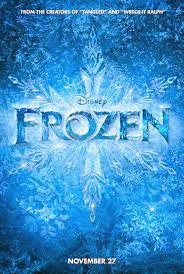
FROZEN (2013) – Film Review

Image
In the kingdom of Arendelle, sisters Anna and Elsa grow up separated by a tragic case of magic. Elsa’s ability to turn her surroundings into ice—a power made more dangerous by its connection to her emotional state—makes her a constant threat to her sister, and to the future of their kingdom. For years, Elsa’s powers are kept secret, even from Anna. The secret makes an unwelcome public appearance when Anna finally confronts Elsa over her lifetime of ostracism. Soon, the entire land is covered in ice. Elsa runs away, and it’s up to Anna to bring her back and rescue Arendelle from a perpetual state of “always winter, never Christmas” (to steal a quote from another fantasy story). CONTENT (C): 8 out of 10 The film has a few mild innuendos—two visual and one verbal. All or most of these pass by without notice. (Until I double-checked the content, I had forgotten about one instance and had missed another one entirely.) There are a couple offhand references to bodily functions, bu...

2012 Booklist: Classics, New and Old

Image
We have looked at the first five of my top ten reads from 2012. Here is the second half of my list. The Horse and His Boy , C. S. Lewis Historically, I have not been a huge fan of the Narnia series. It was a pleasant surprise, then, that I found this story to be quiet entertaining. While the ending may be a bit anticlimactic, I thoroughly enjoyed this particular tromp through the world of Narnia. Spectacular Sins , John Piper This book attempts to reconcile the sovereignty of God with the problem of suffering through a unique approach—by delving into six Biblical stories of “spectacular” (i.e., large and important) sins in the Bible: the rebellion of Satan, humanity’s fall, the pride of Babel, the sale of Joseph, the “tainted” kingship of the Davidic line, and Christ’s betrayal by Judas Iscariot. Piper seeks to show how even the most spectacular sins fail to nullify God’s good purposes—that evil is ultimately used by God as the source of its own suicide. If you ...